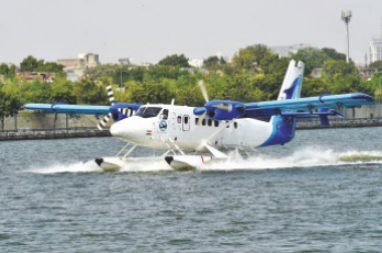
seaplane, Mangaluru Water Metro BENGALURU, APRIL 28, 2026
India’s inland water transport is quietly but decisively shedding its image as a neglected backwater. In an unprecedented convergence of policy momentum, the country is now witnessing a tripartite surge: a booming inland waterways cargo network, the long-awaited commercial takeoff of seaplane services, and a systematic push to urbanise its rivers through water metro systems. At the heart of this transformation is Karnataka, where decades-old ambitions—connecting Mangalore’s backwaters and Mysuru’s scenic dams via seaplanes, and launching a Kochi-style water metro in Mangaluru—are finally moving from files to the water.
- THE NATIONAL STAGE: FROM CARGO TO COMMERCIAL SEAPLANES
India’s inland waterways ecosystem has undergone a tectonic shift in recent years. As of March 2026, 32 of the country’s 111 designated National Waterways, spanning over 5,100 kilometres, are already operational. The government’s immediate plan is to expand this to 52 waterways within the next five years, and the Union Budget 2026-27 has further proposed operationalising 20 additional waterways, reflecting a sustained and expanding policy commitment. The results are already visible on the ground. Cargo movement on National Waterways climbed to an unprecedented 198 million metric tonnes by February 2026, while passenger traffic skyrocketed from 1.61 crore in 2023-24 to 7.6 crore in 2024-25. Notably, the movement on National Waterway-1 along the Ganga grew threefold to 16.38 million metric tonnes in 2024-25 from just 5.05 million metric tonnes a decade earlier. These are no longer pilot projects; inland waterways have decisively moved into the mainstream of India’s logistics landscape.
Complementing this cargo push is a major structural renewal of the UDAN (Ude Desh ka Aam Nagrik) scheme. In March 2026, the Union Cabinet approved the Modified UDAN scheme with a staggering financial outlay of ₹28,840 crore for the decade spanning 2026–27 to 2035–36 to strengthen regional air connectivity. For the first time, the scheme explicitly includes dedicated viability gap funding for seaplane services and water aerodromes, with a target to revive at least 25 such routes. The government also announced incentives to indigenise seaplane manufacturing and introduced a Seaplane Viability Gap Funding (VGF) scheme to support sustainable operations.
This policy push has found its first concrete expression. On April 27, 2026—just one day before this report—SkyHop Aviation received its Air Operator Certificate (AOC) from the Directorate General of Civil Aviation, clearing the way to begin India’s first commercial seaplane services. The certification followed successful water take-offs and landings at the Ganga Barrage and Tehri Lake in Uttarakhand. In the first phase, SkyHop plans to connect five islands in Lakshadweep with each other and the mainland using a 19-seater aircraft. For a country where seaplane services have historically floundered—most notably, a much-publicised SpiceJet service linking Ahmedabad’s Sabarmati riverfront to the Statue of Unity, launched in 2020, closed soon after for lack of viability—SkyHop’s certification marks a genuine inflection point.
KARNATAKA’S AMBITIOUS SEAPLANE NETWORK: THE ROAD SO FAR
Karnataka’s own seaplane ambitions have been long in the making, oscillating between grand vision and bureaucratic inertia for over a decade. The state government has now identified a comprehensive web of destinations under the UDAN 5.5 scheme: Mangalore (Gurupura River), Hampi (TB Dam), Mysuru (KRS Dam), Shivamogga (Jog Falls/Tunga River), Vijayapura (Almatti Dam), Karwar (Kali River), and Hidkal Dam in Belagavi. The project is being pursued under a public-private partnership model. However, this ambitious list has already been overtaken by on-ground realities.
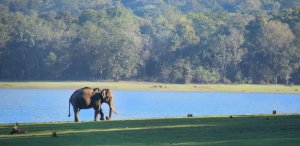
The seaplane project, initially planned for the backwaters of the Krishna Raja Sagar (KRS) Dam in Mandya district, has now been formally relocated to Kabini Dam in Mysuru district. Officials cited technical difficulties in operating planes at KRS Dam, while Kabini offers superior technical feasibility and proximity to Mysore Airport at Mandakalli, offering better accommodation and recreational options for tourists. Moreover, Kabini’s location near the Nagarahole Tiger Reserve aligns perfectly with the government’s stated intention to promote eco-tourism. In August 2025, a Letter of Intent was issued under UDAN 5.5 to initiate services from Kabini Dam, though ground-level officials have since confirmed that no formal communication or operational timeline has yet been received locally. For now, the project remains caught between high-level intent and tangible execution.
The 2026–27 state budget, presented by Chief Minister Siddaramaiah, sought to provide renewed momentum. The government announced a “Comprehensive Coastal Tourism Development Plan” that explicitly mentions improving connectivity between coastal tourist destinations through seaplane and heli-taxi services, in collaboration with aviation and water adventure tourism partners. Mangalore, as the state’s primary coastal city, has been repeatedly named as a key hub in these plans. But the gap between announcement and aerial reality remains unabridged.
III. WATER METRO: MANGALURU’S AQUATIC FUTURE TAKES SHAPE
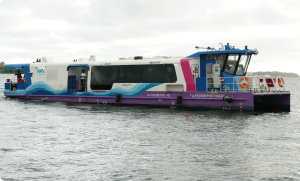
While the skies over Karnataka remain a work in progress, Mangaluru’s waterways are hurtling toward a concrete transformation. At the centre of this ambition is the Mangaluru Water Metro Project (MWMP), being spearheaded by the Karnataka Maritime Board (KMB). Once operational, this will be India’s second-largest water transport system after Kochi. The project proposes an initial phase covering 30 kilometres along the Netravathi (National Waterway-74) and Gurupura (National Waterway-43) river backwaters. The priority route will commence at Bajal on the Netravathi and extend to the Maravoor Bridge on the Gurupura, featuring approximately 17 modern metro stations.
What makes this fundamentally different from conventional ferry services is its design as an integrated multimodal transport solution. The stations will include key locations such as the Old Port (Bunder), Sultan Battery, Ullal (Kotepura), Someshwara Temple, and New Mangalore Port (NMPA). The fleet will deploy electric and diesel-hybrid catamarans equipped with air-conditioned cabins, smart ticketing for seamless integration with bus networks, and Ro-Ro (roll-on/roll-off) capabilities to transport goods and vehicles across the rivers. The KMB’s CEO, Jayaram Raipura, has emphasised that while Mangaluru’s Water Metro will follow Kochi’s broad template, it will be designed to be “more economically viable and robust” and self-sustaining, unlike Kochi’s state-supported model.
Financial estimates for the MWMP vary between ₹180 crore and ₹270 crore, with the most recent reviews placing the figure at ₹270 crore. This variance reflects the evolving scope of the project. In addition to the core urban metro, the KMB has also proposed a separate coastal passenger ferry service stretching approximately 110 kilometres from Mangaluru to Maravanthe in Udupi district, intended as an alternative to the heavily congested National Highway 66. This ferry service is estimated at ₹37.8 crore and will be implemented on a PPP model with a 20-year lease.
The timeline, however, remains fluid. As of February 2026, the Detailed Project Report (DPR) was still under review. Officials have been targeting an initial phase launch by late 2026, but a March 2026 launch estimate has already been missed. On February 12, a high-level meeting of the Coastal Development Board, led by Assembly Speaker U.T. Khader, saw local legislators demanding that the state government immediately finalise the allocation for the Water Metro. For now, Mangaluru waits.
IV. THE REVOLUTION BEYOND KARNATAKA
The water metro phenomenon is not exclusive to Karnataka. The broader national push is being driven by the Inland Waterways Authority of India (IWAI) and the Ministry of Ports, Shipping and Waterways. The central government has prepared a draft National Water Metro Policy 2026, which once finalised will provide a structured national framework standardising planning, design, safety, financing, and operation of water metro systems across the country. Following this, the government has also drawn up a ₹9,200-crore scheme for the development of water metro systems across India, with each individual project estimated to cost between ₹800 crore and ₹1,300 crore.
Kochi Metro Rail Ltd (KMRL), the agency behind Kerala’s pioneering water metro, has been conducting feasibility studies for replicating the model in 18 locations spanning 11 states and two Union Territories. The cities evaluated include Srinagar, Guwahati, Tezpur, Dibrugarh, Patna, Varanasi, Ayodhya, Prayagraj, Cuttack, Ahmedabad, Surat, Goa, Mangaluru, Kollam, and Alappuzha. Significantly, KMRL has already submitted a Detailed Project Report for implementing a water metro system across the Mumbai Metropolitan Region covering 250 kilometres of waterways and proposing 21 routes, 49 terminals and 207 boats. The consultancy engagement alone generated 8 crore in revenue for KMRL, demonstrating the commercial viability of replicating the water metro model.
V. THE LONG VIEW
What makes the current moment truly distinct is the convergence of three policy streams. The first is the fiscal push: a ₹28,840 crore Modified UDAN scheme, a proposed 9,200 crore water metro scheme, and a 48 per cent increase in the maritime ministry’s budget. The second is regulatory clearance: SkyHop’s AOC is a genuine milestone that breaks a decade-long impasse in commercial seaplane operations. The third is institutional capacity: KMRL’s successful nationwide feasibility studies and the central government’s draft Water Metro Policy together provide the implementation framework that was conspicuously absent in earlier efforts.
And yet, prudence demands acknowledgment of the gap between announcement and execution. Seaplane services have been on India’s “about to happen” list since the first UDAN scheme was launched in 2016. The Kabini Dam Letter of Intent remains unaccompanied by an operational date. Mangaluru’s Water Metro, now in its second year of DPR review, is no closer to water than it was when first announced. What is different now is the presence of a robust institutional scaffolding—viability gap funding, modified UDAN with explicit seaplane provisions, and a national water metro policy—that simply did not exist in earlier, failed attempts.
Karnataka stands at a unique confluence: a state with both the natural geography—rivers, backwaters, dams, and a long coastline—and the policy architecture to become a national laboratory for integrated water-based transport. But ambition is not aviation, and paperwork is not propulsion.
For now, the coast waits. The backwaters of Kabini and Gurupura remain picturesquely silent. But for the first time in a decade, the wait has a credible endpoint.
The writer is a senior journalist with decades of experience covering polity, policy, and infrastructure. This piece is part of an ongoing series on human wellbeing and the forces that shape it.